MoE 推理:Expert Parallelism(EP)、显存与调度
MoE 推理中的参数口径、dispatch-compute-combine 数据流、EP 边界与显存合同
本文目录
MoE 推理的难点不只是“每个 token 只激活少量参数”。所有 expert 权重仍要被放置和管理,token 还要经过路由、跨 rank dispatch、expert 计算与 combine。
这篇负责 MoE 的数据流和参数口径;通用 TP/PP/DP/EP 组合由 推理并行策略 展开,显存与吞吐公式由 模拟器建模指南 收口。
- 一句话:MoE 用稀疏激活降低单 token 计算,但把 Serving 复杂度转移到全量 expert 驻留、路由、all-to-all 与负载均衡。
- 三个判断:active 参数决定每 token 计算而非总权重显存;EP 分散不同 expert 但不自动切开单个 expert;性能必须同时看 expert token 分布、dispatch/combine 与 grouped GEMM。
- 核心模型:,每 rank 显存包含 dense/attention shard、local experts、KV 与 runtime workspace。
- 边界:expert 数、top-k、shared expert、路由函数和通信实现均为模型/版本合同;本文不把某个未核验模型参数或公开 benchmark 外推成通用结论。
1. Expert 与三种参数口径
一个常见 SwiGLU expert 包含 gate、up、down 三个投影:
gate/up: [hidden, expert_intermediate]
down:    [expert_intermediate, hidden]
Router 为每个 token 选择 top-k routed experts,并用路由权重合并输出;shared expert 若存在,则对所有 token 执行。
必须区分:
| 口径 | 含义 | 主要用途 |
|---|---|---|
| 总参数 | dense/shared + 全部 routed experts | checkpoint 与全局权重容量 |
| Active 参数 | 单 token 实际经过的 dense/shared + top-k experts | 计算量近似 |
| 单 expert 参数 | 一个 expert 的权重 | 判断 expert 是否需要内部 TP |
“active 40B”不等于模型只需保存 40B 参数,也不等于 40GB 显存。权重字节还取决于存储格式、scale、padding 和 runtime layout。
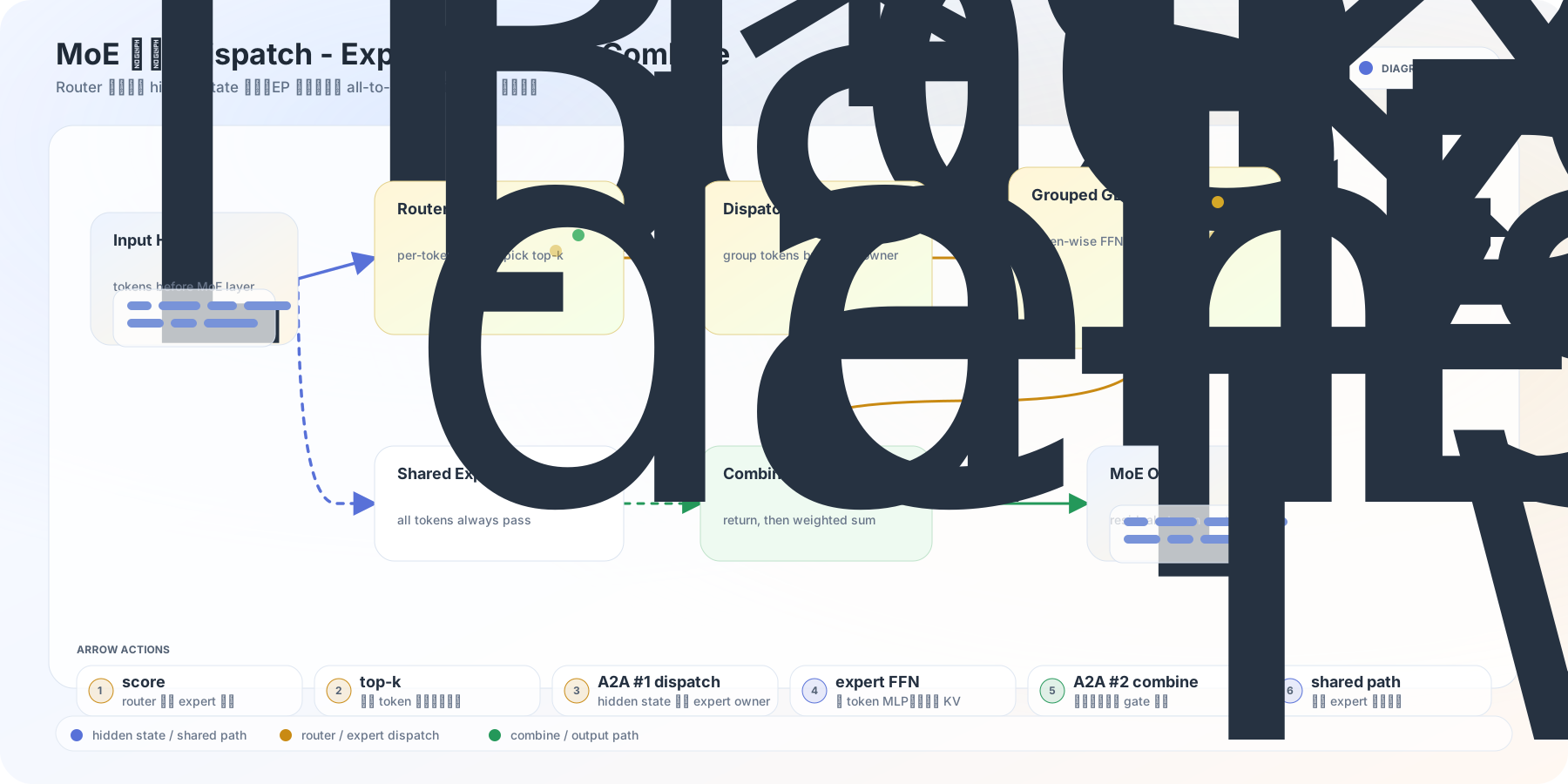
2. 完整执行流程:Dispatch - Compute - Combine
hidden states
  -> Router: top-k expert ids + weights
  -> Dispatch #1: token 按 expert owner 重排/发送
  -> Grouped GEMM: 各 expert 对收到的 token 分别执行 FFN
  -> Combine #2: expert 输出回到原 token/rank
  -> Weighted sum: 按 router weights 加权聚合
  -> + shared expert path(若模型定义)
对 token :
Router 对每个 token 的当前 hidden state 独立打分;它不直接读取 KV Cache 或其他 token。由于 已经过 Attention,它仍然包含上下文信息。每个 routed expert 是一套独立 FFN 参数:它只对收到的向量执行 MLP,不需要历史 K/V,也不直接读取其他 token。
实际 kernel 通常不会一次只算一个向量,而是把路由到同一 expert 的 token 收拢成子 batch,再用 Grouped GEMM 执行。这会让性能依赖 tokens_per_expert、padding 和负载均衡,但不会改变 Expert FFN 的逐 token 语义。
在 Expert 跨 rank 放置的 EP 配置中,dispatch 通常构成第一次 all-to-all,返回 expert 输出的 combine 构成第二次 all-to-all。若 top-k expert 位于本地、模型运行在单卡,或 backend 使用不同的 fused/point-to-point 实现,则不能仅凭“这是 MoE”断言一定发生两次跨卡 collective。
这条路径的关键观测不是“有多少 expert”,而是:
tokens_per_expert distribution
dispatch bytes / duration
grouped GEMM shape / duration
combine bytes / duration
load imbalance and synchronization
若少数 expert 过热,慢 rank 会延长整个 collective 的完成时间;若 batch/chunk 太小,每个 expert 收到的 token 太少,grouped GEMM 也可能低效。
3. 并行切分策略
MoE 页只保留与 expert 数据流直接相关的边界:
- EP(Expert Parallel):不同 rank 持有不同 experts;token 通过 all-to-all 到 owner,再把结果送回;
- TP(Tensor Parallel):切一个过大的 expert 或 dense/attention 矩阵;会增加该层内部 collective;
- DP:复制可服务的模型实例、分摊请求;通常不降低单实例权重显存;
- PP:按层切 stage;降低每个 stage 的层数,同时引入流水与激活传输。
EP 的简化权重估算是:
其中:
这只在 expert 均匀放置且没有 replica/冗余时成立。若单个 expert 在保留 KV 与 workspace 后仍放不进一张卡,简单 EP 不够,需要 expert 内 TP、PP 或其他切分。
完整并行选择、通信和拓扑合同见 推理并行策略。
4. 单 rank 显存合同
不要只把总参数除以 GPU 数。每 rank 的常驻与峰值显存至少包括:
权重部分要使用实际 resident layout:
Active 参数适合估算计算,不适合代替 resident weights。量化格式的 scale 粒度与模拟器实现见 FP4/FP8 量化 和 模拟器建模指南。
5. Residency、Offload 与通信
查证层:工程实现需要额外确认什么
低延迟 Serving 通常倾向让 local expert 权重常驻 HBM,因为按 token 或按层从 CPU/NVMe 取权重会引入带宽、排队和 miss penalty。但“必须全部常驻”不是脱离 SLO 的定律:离线、低并发或分层缓存场景可能接受 offload。
评估 expert cache / offload 时应记录:
resident experts, hit/miss rate, transfer bytes,
PCIe/RDMA/NVMe effective bandwidth,
load latency, overlap ratio, TTFT/TPOT impact
DeepEP 等库提供 MoE dispatch/combine 通信能力。吞吐、低延迟模式、精度路径与 overlap 能力随目标版本和拓扑变化,不能把单个公开案例的 EP 规模或倍数当成容量常量。
一个粗略的 activation 通信量起点是:
Combine 还有返回流量。真实 per-rank 字节取决于 token 是否本地命中、路由分布、量化/压缩、冗余发送和 collective 实现,需用 trace 或通信计数器校准。
6. 从 Trace 判断 MoE 瓶颈
按以下顺序收集证据:
- Router 输出的
tokens_per_expert是否倾斜; - Dispatch/combine 是否处于 GPU 关键路径;
- Grouped GEMM 的每 expert 维是否过小;
- 慢 rank、网络链路或同步是否拖长 collective;
- Prefill chunk / Decode batch 的变化是否同时改变以上形状。
仅看到 NCCL 时间高,不能判断是网络带宽不足:上游计算迟到、负载不均或显式同步也会让 collective 包络变长。
相关页面
被以下页面引用(8)
修改历史9 次提交
- docs: update inference runtime and add Engram TP/DP researchweigao chen··
04637c6 - docs: clarify per-token MoE layer flowxiaocheng··
53e048b - docs: refine LLM inference knowledge systemxiaocheng··
f8756b9 - docs(wiki): render inference formulas with latexxiaocheng··
6c51439 - feat(wiki): enforce lifecycle metadata and search aliasesxiaocheng··
1dad7ef - feat(wiki): connect core topics and add reading seriesxiaocheng··
9fc9884 - docs(wiki): publish July inference researchxiaocheng··
0a9b76b - docs: add inference profiling notesxiaocheng··
6885adf - feat(wiki): ingest 4 raw articles + split inference survey into 5 pagesxiaocheng··
483c321